INSTITUTE OF ENGINEERING
Pulchowk, Lalitpur
Pulchowk, Lalitpur
[Note: This section of the website is currently under development.]
At the Institute of Engineering (IOE), research plays a central role in advancing knowledge, solving real-world problems, and driving innovation. Our specialized research centers span across diverse engineering disciplines, supporting both national development and global collaboration.

The Center for Energy Studies (CES) was established in 1999 at IOE, Tribhuvan University, following the recommendation of the RETRUD-98 International Conference. CES was created to support the development and application of renewable energy technologies, energy efficiency, and sustainable power systems in Nepal. It aims to address national energy challenges by promoting research, education, and capacity building, while also contributing to rural electrification and national energy policy formulation. CES plays a vital role in the global transition towards clean, renewable energy, and fosters collaborations with international institutions.
Focus Areas: Renewable Energy Research and Development, Energy Efficiency, Sustainable Power Systems, National Energy Policy
Key Projects: Zero Energy House (ZEH), Building Integrated Photovoltaic Electric Systems (BIPVES), Earth Air Tunneling (EAT), Improved Cooking Stoves (ICS), Solar Passive Technology and many more...
Contact: ces@ioe.edu.np
Website: https://ces.tu.edu.np/
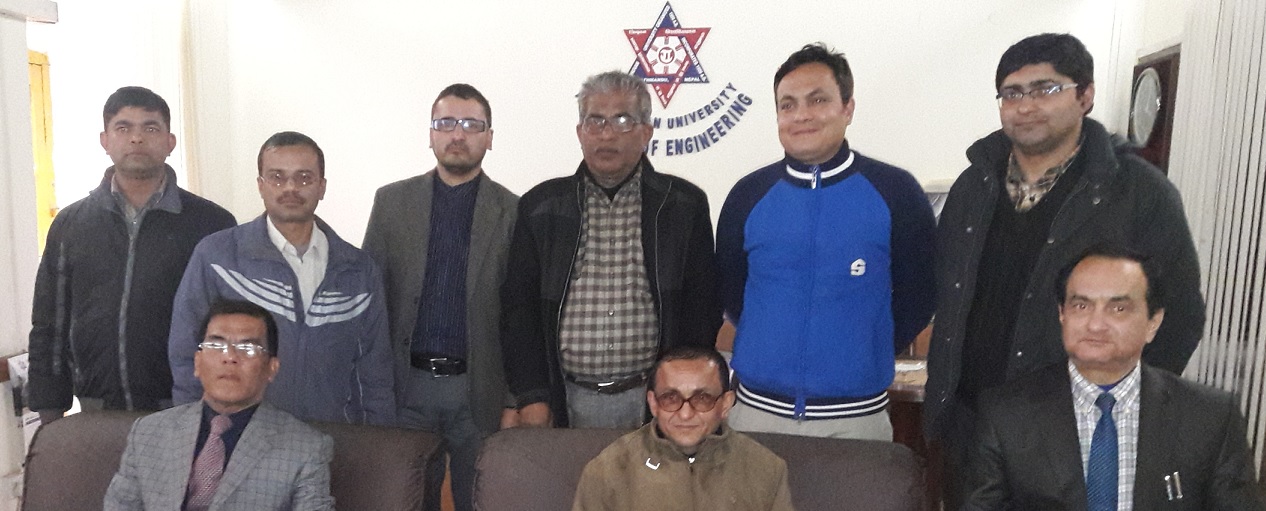
Laboratory for ICT Research and Development (LICT) is the new laboratory established on 1st January,2017 at Institute of Engineering, Tribhuvan University, Nepal with the vision to have world class research on Information and Communication Technology.
Focus Areas: New Network Technologies: NGN, Software Defined Network, IPv6, Wireless Communications, WSN, IoT, Cloud Computing and Virtualization, FOG computing, Big Data, Machine Learning, Natural Language Processing, Image Processing & AI, Software Engineering & Information Systems, Research projects on any ICT related fields and Many More .....
Key Projects: Centralized Admission - CASI, 5G Network - CISNetMIN, IOE Entrance - RETIENS, and Many More...
Contact: lict@ioe.edu.np
Website: https://lict.ioe.tu.edu.np
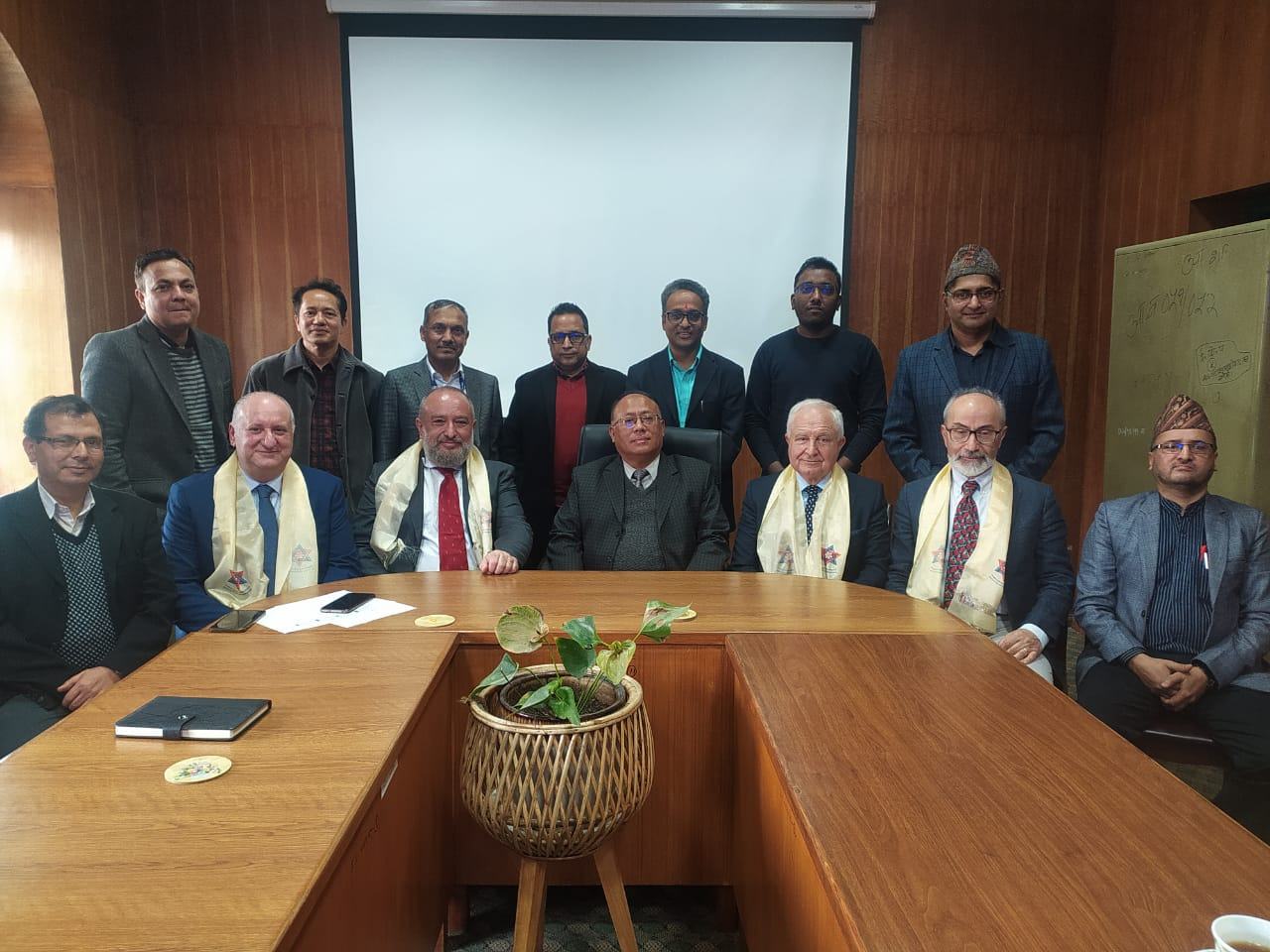
Center for Applied Research and Development (CARD) is an autonomous research and development center within the IOE, Tribhuvan University (TU). CARD thrives to establish a culture of research and development leadership at the IOE. It shall support all kinds of scholarly activities: fundamental research, applied research development, contract research to government, non-governmental and international agencies. It capitalizes on the wide range of multi-disciplinary in-house expertise and capabilities of the IOE. Established on April 15, 1994 CARD is a part of the collaboration program between the Institute of Engineering /Tribhuvan University and the Norwegian University of Science and Technology, the University of Trondheim through funds made available by the Norwegian Universities Committee for Development Research and Education (NUFU).
Focus Areas: Multidisciplinary engineering research, Industrial Applications of Research
Key Projects: ERASMUS+ Mobility Project [KA171-HED], Analysis of September 2024 flood for Upper Trishuli-1 (UT-1) Hydroelectric Project, Model-based Estimation of Flood Inundation Risk Under Climate Change Context and Associated Stress on Ranny Well Planned in Koshi River and many more...
Contact: basanta.joshi@puc.tu.edu.np
Website: https://card.ioe.tu.edu.np/

The Centre for Disaster Studies (CDS) was established in 2003 under the Institute of Engineering (IOE), Tribhuvan University, to address Nepal’s high vulnerability to disasters and climate change. Located at Pulchowk, Lalitpur, the centre focuses on research, innovation, and human resource development in disaster risk reduction (DRR). Nepal ranks eleventh among earthquake-prone countries, with a history of major seismic events every 70–100 years, and continues to suffer significant human and economic losses due to limited awareness, inadequate expertise, and scarce resources. Moreover, this country is facing geohazard problems in the changing climate change. In response, CDS was created to strengthen disaster resilience through knowledge creation, training, and capacity building. Its vision is to enhance community resilience nationwide, while its goal emphasizes technological innovation and skilled human resource development. The centre’s key objectives include contributing to human capital formation by training engineers, technologists, researchers, and technicians in DRR and climate change, and supporting innovation by generating, adapting, and disseminating knowledge to address local and global disaster challenges
Focus Areas: Disaster Risk Reduction and Management, Climate change, Multi-hazard risk assessment, Community-based disaster risk reduction, Anticipatory action, Early warning system, Research and trainings
Key Projects: Center for Natural Resources and Development (CNRD), South-East Asian Educational Network for Disaster and Environmental Engineering (SEAN-DEE), Disaster Information Sharing System, Himalayan Erosion and Hazard Science, Transforming Political Capabilities for Equitable Resilience, Tomorrow’s City Decision Support System (TCDSE), Disaster Risk Management Plan
Contact: bradhikari@ioe.edu.np
.
Focus Areas: .
Key Projects: .
Contact: .
.
Focus Areas: .
Key Projects: .
Contact: .
.
Focus Areas: .
Key Projects: .
Contact: .
.
Focus Areas: .
Key Projects: .
Contact: .
.
Focus Areas: .
Key Projects: .
Contact: .
.
Focus Areas: .
Key Projects: .
Contact: .
.
Focus Areas: .
Key Projects:.
Contact: .
Website:
.
Focus Areas: .
Key Projects:.
Contact: .
Website:.